

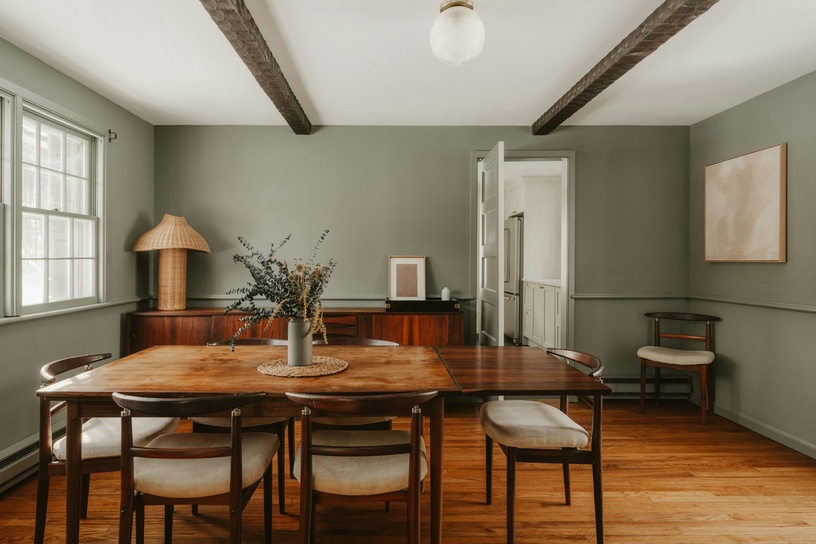
It begins with the perfect floor! When you select natural hardwood to elevate your home, you establish the essential foundation for your entire interior design. The right grain, tone, and plank width set a rich tone that reflects across every room in your residence. However, bringing premium wood planks directly from a delivery truck onto your subfloor without a pause invites long-term structural trouble. South Florida brings intense heat, heavy downpours, and fluctuating humidity levels throughout the year. If you rush installation and skip proper hardwood floor acclimation, your new planks can easily cup, warp, or separate within a few seasons. At Floor Specialists in Wellington, FL, we have helped homeowners across Palm Beach County protect their living spaces for close to two decades. Under the direction of owner Tom Ferris, whose family carries a long tradition in the flooring industry, our team guides clients through every phase of wood selection, testing, and installation. Whether your home is located in Wellington, Palm Beach Gardens, Jupiter, or Boca Raton, FL, mastering the acclimation timeline ensures your wood floors remain beautiful, stable, and seamless for generations.
How long does hardwood flooring need to acclimate before installation?
As a general guideline, solid hardwood planks require three to seven days to adjust to indoor air conditions, whereas engineered wood planks typically need 48 to 72 hours. However, counting days on a calendar should never be your only standard. Acclimating hardwood flooring is fundamentally about balancing moisture levels between the raw timber and your indoor home environment until both reach a stable equilibrium.
Natural wood acts much like a dense sponge. When surrounding air is humid, raw wood fibers expand as they soak up vapor; when the indoor climate turns dry, those same fibers shed moisture and shrink. If installers lay dry planks into a humid room, those boards will force themselves outward against one another, causing edges to buckle upwards. If moist boards are nailed down and subsequently dry out, gaps will open up right across your floor.
Rather than guessing based on days alone, our installation specialists rely on pinpoint moisture meters. We test multiple boards across different boxes and cross-reference those figures directly against your subfloor material. Once the moisture gap between the subfloor and solid planks drops to three percent or less (or four percent for engineered products), your materials are fully stabilized and safe to lay down.
What factors impact hardwood floor acclimation time frames?
Not every wood species or plank construction adjusts at the same speed. Several structural and environmental variables dictate how quickly your materials reach moisture stability inside your living area.
Wood species density: High-density exotic hardwoods absorb and release ambient moisture far more slowly than traditional domestic hardwoods like American oak or maple.
Solid versus engineered planks: Solid hardwood consists of a single solid piece of timber, making it particularly sensitive to surrounding air conditions. Engineered hardwood features a real wood surface layer built over cross-ply backing, offering heightened dimensional stability and requiring a shorter adjustment window.
Plank width variations: Wide-plank boards feature a larger surface area exposed to humidity. As a result, wide-format planks expand and contract significantly across their face, requiring meticulous testing and added patience.
Storage and shipping history: Materials stored in non-conditioned warehouses or shipped across long distances need extra time to adapt to Palm Beach County's unique coastal humidity.
How should you prepare your home for acclimating hardwood flooring?
Placing unopened boxes inside a garage, covered lanai, or screened patio will compromise your flooring before work even starts. Outdoor spaces and unconditioned garages expose raw wood to extreme temperature spikes and damp sea air, setting the stage for permanent board damage.
To acclimate your materials correctly, bring all boxes directly into the enclosed rooms where installation will take place. Your home air conditioning system must run continuously under normal living parameters for at least five full days prior to delivery. Keep your thermostat set between 60 and 80 degrees Fahrenheit, and maintain indoor relative humidity levels between 35 and 55 percent.
Stack your boxes in an open grid pattern elevated off the bare subfloor. Open the end flaps of each carton or slice open protective plastic wrapping so ambient air circulates evenly around every board. This allows every layer of timber to adapt uniformly rather than leaving interior boards unexposed.
What severe problems happen if you skip hardwood floor acclimation?
Installing wood before its internal moisture balances with your home environment triggers structural defects that degrade your home aesthetics and demand expensive repairs.
Board cupping: When raw planks absorb excess moisture rising from the subfloor beneath, the edges of each board swell upward higher than its center, creating a wavy, uneven surface.
Board crowning: If board surfaces dry out rapidly while moisture remains trapped in their undersides, the centers of the planks bulge upward higher than the edges.
Persistent gapping: As high-moisture planks gradually dry out post-installation, individual boards shrink away from one another, leaving distinct gaps where dust and debris collect.
Floor buckling: In extreme cases of moisture expansion, growing boards press against each other with enough force to lift off the subfloor entirely, pulling fasteners loose and ruining the installation.
Why trust local experts for your hardwood flooring project?
Investing in real wood flooring adds timeless character, quiet comfort, and lasting monetary value to your property. Achieving those benefits requires meticulous care from the moment materials arrive at your doorstep. At Floor Specialists, our team brings decades of specialized design knowledge and hands-on installation experience to every project across the western communities.
We offer a personalized, attentive experience that goes far beyond big-box retail. From calculating exact room dimensions and evaluating subfloor moisture to recommending the ideal wood grain for your lifestyle, we manage every detail with extreme precision.
Whether you are updating a modern residence in Palm Beach Gardens, restoring a coastal home in Jupiter, or renovating a estate in Boca Raton, FL, our team ensures your wood is conditioned to perfection for South Florida living. Visit our Wellington showroom or reach out to us online to request your professional in-home estimate today.


